


How to Stop Snoring Naturally: A Gentle Guide to Nasal Breathing & Mouth Taping
How to Stop Snoring Naturally: A Gentle Guide to Nasal Breathing & Mouth Taping
Snoring can feel like a small problem until it starts to affect everything. It wakes you up. It wakes your partner up. It leaves both of you tired, irritated and relying on coffee just to survive the day. For many couples, snoring becomes a running joke at first — and then slowly turns into a quiet source of tension in the bedroom.
If you snore, you’ve probably already googled “how to stop snoring naturally” or “snoring solution that actually works”. Maybe you have seen strange head straps, plastic mouthpieces, or bulky machines that look more like hospital equipment than something you want in a cosy bedroom. It is completely normal to want a gentler option.
This guide will walk you through natural ways to reduce snoring, why nasal breathing is so powerful, and where a soft, beauty-friendly product like KOEC Mouth Tape fits into your routine. The goal is simple: quieter nights, deeper sleep and a calmer relationship with your pillow partner.

What Actually Causes Snoring?
Snoring happens when air struggles to move smoothly through your airways while you sleep. As you relax, the muscles in your throat loosen. If the airway narrows, the moving air makes those tissues vibrate — and that vibration is the sound we call snoring.
Common reasons why snoring happens include:
- Mouth breathing: Sleeping with your mouth open increases vibration in the tissues at the back of the throat.
- Sleeping on your back: This position lets gravity pull the tongue and soft palate backward, narrowing the airway.
- Nasal congestion: Allergies, colds or a deviated septum can make it harder to breathe through your nose, forcing you to breathe through your mouth.
- Extra tissue around the neck and throat: Weight gain can increase pressure in the airway.
- Alcohol and heavy evening meals: These relax throat muscles even more and can worsen snoring.
Sometimes snoring is simply noisy breathing. In other cases, it can be a sign of something more serious like sleep apnea. If your partner notices long pauses in your breathing or you wake up choking or gasping, it’s important to speak with a doctor or sleep specialist. Trusted sources such as the Sleep Foundation and Mayo Clinic offer helpful overviews of when snoring becomes a medical concern.
Why Mouth Breathing Makes Snoring Worse
One of the biggest hidden drivers of snoring is mouth breathing. When your mouth hangs open at night, air flows straight through your mouth and hits the back of your throat at high speed. That turbulent airflow vibrates soft tissues and creates louder, harsher snoring sounds.
Mouth breathing at night is often linked to:
- Dry mouth and sore throat in the morning
- Night-time awakenings for water
- More fragmented, shallow sleep
- Feeling “foggy” even after a full night in bed
By contrast, nasal breathing filters, warms and humidifies the air. It supports a smoother flow of air and can stabilise breathing patterns during sleep. When your lips stay gently together, your jaw is relaxed and your tongue naturally rests toward the roof of the mouth — opening more space at the back of the throat. That’s why so many natural snoring solutions focus on encouraging nasal breathing instead of forcing the airway open with gadgets.

Natural Ways to Reduce Snoring (Before You Buy Any Gadgets)
Before you spend money on complicated devices, it helps to explore simple, natural changes that can make a real difference. Not every tip will apply to everyone, but many people find that layering several small adjustments leads to noticeably quieter nights.
1. Change Your Sleep Position
Snoring is usually worst when you lie on your back. That position allows gravity to pull your tongue and soft palate backward, narrowing the airway and increasing vibration.
Try:
- Sleeping on your side with a supportive pillow
- Using a long body pillow to keep your body from rolling onto your back
- Raising the head of your bed slightly (a few centimetres) so your upper body is gently elevated

2. Support Your Nose
If your nose is blocked, your body has no choice but to open the mouth. Taking care of your nasal passages is a key part of any natural snoring plan.
You can:
- Blow your nose gently before bed
- Use a saline spray or rinse (as recommended on the product)
- Take a warm shower in the evening to loosen congestion
- Talk to a healthcare professional if you suspect chronic allergies or a structural issue
Even small improvements in nasal airflow can make mouth breathing less necessary and snoring less severe.
3. Adjust Evening Habits
Some lifestyle choices make snoring more likely. If you want a natural snoring solution, these habits are worth reviewing:
- Alcohol: Try to avoid drinking alcohol in the last few hours before bed. It relaxes throat muscles and often leads to heavier snoring.
- Heavy, late meals: Large dinners close to bedtime can increase reflux and pressure on the diaphragm, which can aggravate snoring.
- Screen time and stress: High stress keeps your nervous system alert, which can contribute to restless sleep and mouth breathing.
4. Create a Snore-Friendly Bedroom
Your sleep environment matters more than you think. Aim for:
- A cool, dark room
- Soft bedding that supports side sleeping
- Moderate humidity (not too dry, not too damp)
- Minimal noise and light pollution
These changes don’t directly “treat” snoring, but they make it easier for your body to relax into deeper, calmer sleep — which supports better breathing patterns overall.
Where Mouth Taping Fits In: A Gentle Cue for Nasal Breathing
Once you have addressed your sleeping position, your nasal health and your evening habits, you can consider adding a gentle physical cue: mouth taping. Instead of forcing your jaw shut, a product like KOEC Mouth Tape simply reminds your lips to stay softly together while you sleep.
KOEC was created as a beauty-sleep friendly mouth tape. Instead of harsh, medical-style tape, it uses:
- A soft fabric surface that flexes with your movements
- A skin-kind adhesive suitable for the delicate lip area
- An oval shape that comfortably covers the lips while avoiding the nose
- A small central vent that lets small amounts of air escape if needed
- A calm, feminine design that fits into a self-care ritual
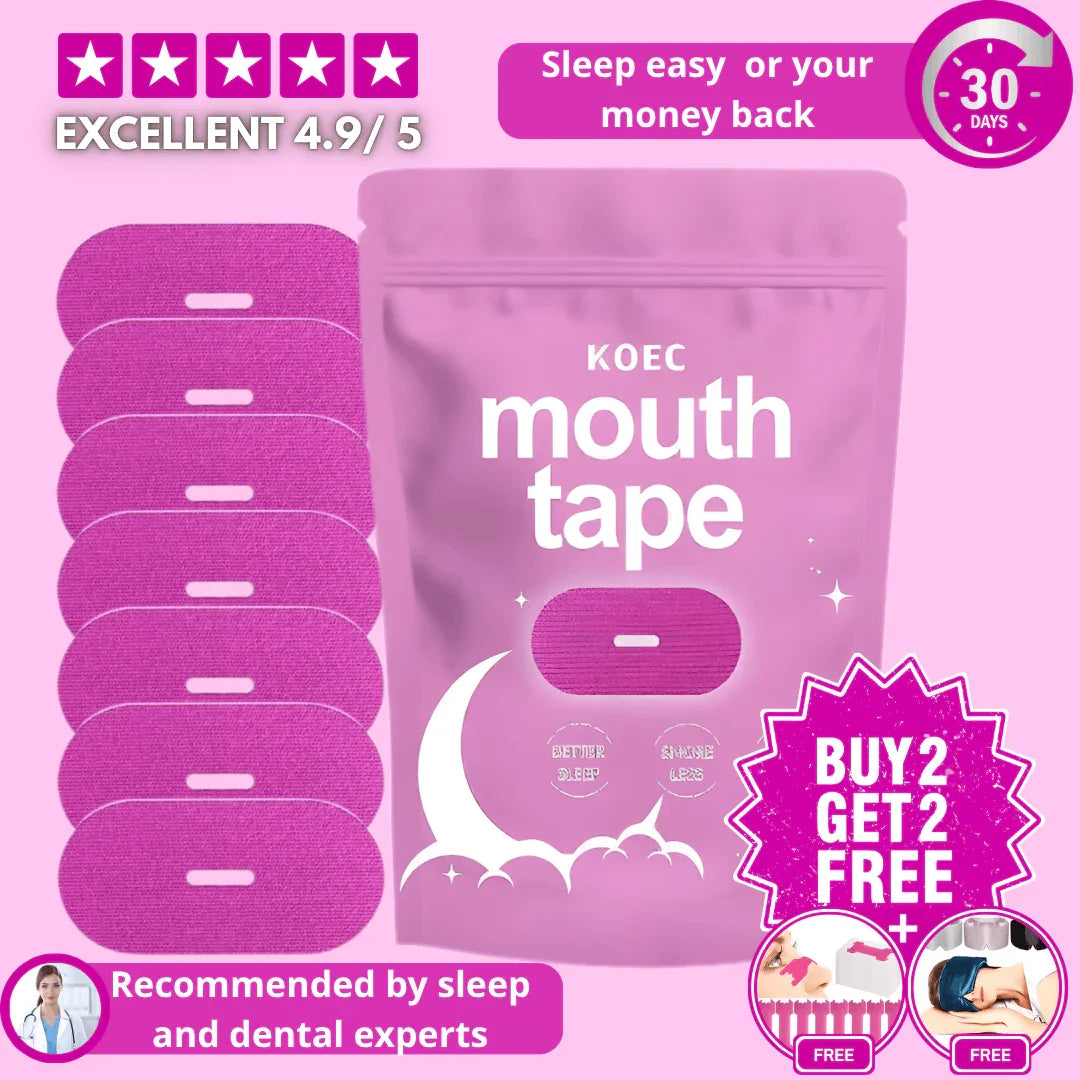
By encouraging nasal breathing, KOEC Mouth Tape can help:
- Reduce the loudness and frequency of snoring for some users
- Decrease night-time dry mouth and morning throat irritation
- Support deeper, more restorative sleep
- Improve how rested and fresh you look in the morning
It is important to note that mouth taping is not a cure for sleep apnea or serious medical snoring conditions. If you suspect your snoring is linked to something more serious, talk to a doctor before using any mouth tape.
How to Use KOEC Mouth Tape as Part of a Natural Snoring Plan
Think of KOEC as one part of a holistic plan: better nasal breathing + better sleep habits + gentle physical support. Here is a simple step-by-step approach you can follow.
Step 1: Check Your Breathing
Before you ever place a strip on your lips, make sure you can comfortably breathe through your nose while awake. Try breathing through your nose for a few minutes while sitting or lying down. If you feel significant blockage or distress, speak with a healthcare professional before continuing.
Step 2: Build a Calming Night Routine
About 30–60 minutes before bed:
- Dim the lights and reduce screen time
- Cleanse and moisturise your face as usual
- Gently clear your nose
- Drink a small glass of water if you feel thirsty — not a litre
This signals to your body that sleep is coming and makes it easier to relax into nasal breathing.
Step 3: Apply KOEC Mouth Tape
Once your skin around the lips is dry and clean, peel one KOEC strip from the backing. Close your mouth gently, relax your jaw, and place the strip horizontally across the centre of your lips. Smooth it outward with your fingers so it sits flat and comfortable.
You should feel a light, supportive hold — enough to keep the lips from parting easily, but not so strong that you feel trapped. If you need reassurance at first, remember the small vent in the centre is there to allow some air to escape if you need to cough or sigh.
Step 4: Start Slowly
On the first few nights, you don’t have to commit to a full eight hours. You can:
- Wear KOEC while reading in bed, just to get used to the sensation
- Try it for a short nap in the afternoon
- Remove it anytime you feel anxious or uncomfortable
Most people find that, after a short adjustment period, mouth taping feels surprisingly normal — even comforting — because it encourages calm, quiet breathing.
Step 5: Combine With Other Natural Strategies
For the best snoring results, combine KOEC with the natural strategies from earlier:
- Sleep on your side instead of your back
- Keep alcohol and big meals away from bedtime
- Support your nose with saline spray or steam
- Create a bedroom environment that supports deep, uninterrupted sleep
This layered approach works better than relying on any single trick. You are helping your body in multiple ways: better breathing mechanics, calmer nerves, more supportive posture and a healthier night-time environment.

How Natural Snoring Solutions Can Help Your Relationship
Snoring is not just a physical problem; it is a relationship problem too. Partners who don’t sleep well together often feel more irritable, less affectionate and less patient with each other. Over time, separate bedrooms, jokes about “sounding like a tractor” and silent resentment can slowly erode connection.
Working on your snoring naturally sends a different message: “Our sleep matters, and your rest matters to me.” A simple change like introducing KOEC Mouth Tape as part of a shared experiment can become a small act of care, not just another product.
Some couples like to treat it like a 30-night challenge. You keep notes on:
- How loud the snoring sounds each night
- How many times each person wakes up
- Morning energy levels and mood
- How easy it is to fall back asleep after waking
Even modest improvements — slightly quieter nights, fewer awakenings, less morning brain fog — can add up to a kinder, more positive atmosphere at home.
When to Seek Professional Help About Snoring
Natural snoring solutions are a great starting point, but they are not a replacement for medical advice when needed. You should talk to your doctor, dentist or a sleep specialist if:
- Your partner notices long pauses in your breathing during the night
- You frequently wake up gasping, choking or feeling panicked
- You have chest pain, severe morning headaches or extreme daytime sleepiness
- You have existing heart or lung conditions
- Your snoring is extremely loud and has been getting steadily worse
Conditions like obstructive sleep apnea need professional assessment and can require specific treatments. You can still use many of the natural strategies in this article — such as sleeping on your side, improving your bedroom environment and supporting nasal breathing — but decisions about devices, mouthpieces or combinations of therapies should be guided by a professional.
Putting It All Together: A Calm, Natural Plan to Snore Less
If snoring is frustrating you or your partner, you don’t have to jump straight to extreme solutions. Start with your habits and your breathing:
- Encourage nasal breathing instead of mouth breathing
- Experiment with side sleeping and gentle head elevation
- Reduce late-night alcohol and heavy meals
- Care for your nose and airways so they stay clear
- Use a soft, skin-kind mouth tape like KOEC Mouth Tape to gently support closed lips at night
KOEC is designed to make the process feel less clinical and more like self-care. With its soft pink aesthetic, beauty-sleep messaging and skin-friendly materials, it fits easily alongside your favourite night cream, silk pillowcase and calming herbal tea.
If you are ready to explore a quieter, more connected night’s sleep, you can learn more or start your own experiment at koec.online. Sometimes, the difference between a noisy, exhausting night and a peaceful one is as simple as teaching your body to breathe through your nose and giving your lips a gentle reminder to stay together.


