


Mouth Breathing, Anxiety & Night-Time Overthinking: How KOEC Mouth Tape Helps Calm Your Sleep
Mouth Breathing, Anxiety & Night-Time Overthinking: How KOEC Mouth Tape Helps Calm Your Sleep
It’s a familiar story: you crawl into bed feeling tired, but the moment your head hits the pillow, your brain switches on. Your thoughts race, your heart feels a little too fast, and you keep tossing and turning. By morning, you wake up exhausted, with a dry mouth, a heavy head and the feeling that you barely slept at all.
We often blame this on “anxiety” or “overthinking” — and that’s true. But there is another piece of the puzzle that most people never consider: how you breathe at night. If you snore, sleep with your mouth open, or wake up with a dry mouth and sore throat, your breathing pattern may be quietly keeping your nervous system in a more stressed state all night long.
In this guide, we’ll explore how mouth breathing, anxiety and night-time overthinking are connected, and how a gentle tool like KOEC Mouth Tape can support calmer, more nasal breathing and deeper sleep. It’s not a cure for anxiety — but it can be a powerful ally for your nervous system and your sleep quality.
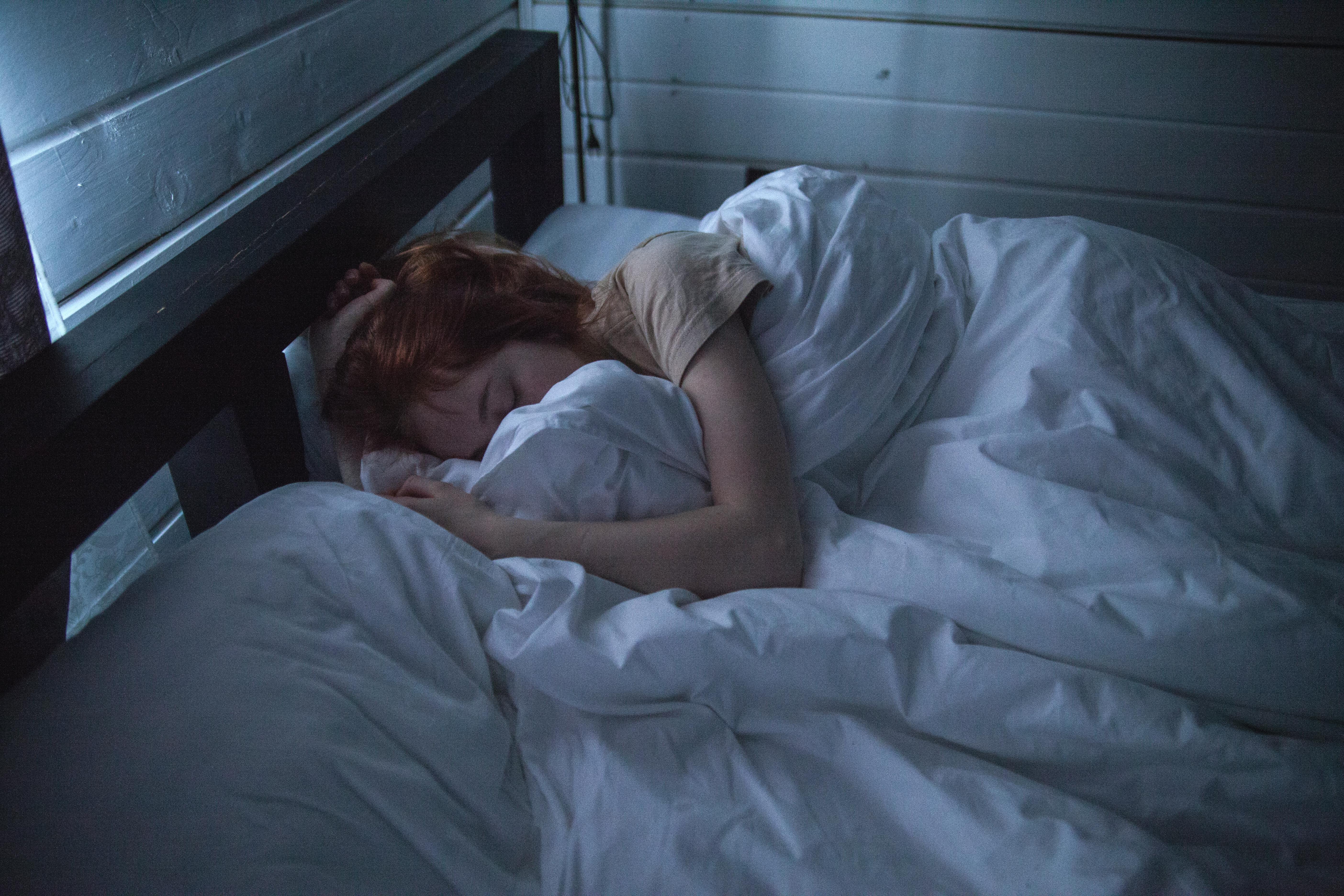
How Anxiety Shows Up at Night
During the day, you can distract yourself from anxiety with work, scrolling or conversation. At night, when everything is quiet and dark, your mind finally has space — and that’s when worry likes to get loud.
Common signs of night-time anxiety include:
- Racing thoughts and replaying conversations
- A tight feeling in the chest or throat
- Heart beating faster than you’d like
- Shallow breathing or sighing a lot
- Difficulty falling asleep or waking up in the middle of the night
- Feeling wired and tired at the same time

Many people don’t realise that their breathing feeds into this cycle. When you breathe fast, shallow or through your mouth, your body can interpret this as a sign of stress — even if you’re lying still in bed.
Your Nervous System: Fight-or-Flight vs. Rest-and-Digest
Your body has two main “modes”: a stress mode (often called fight-or-flight) and a rest-and-digest mode. Neither is bad — you need both — but at night you want your body to spend more time in the rest-and-digest state so you can sleep deeply and repair.
When your nervous system is in stress mode, you may experience:
- Increased heart rate
- Shallower, faster breathing
- Higher levels of stress hormones like cortisol
- Muscle tension and jaw clenching
At night, that can look like lying in bed with your mind racing, muscles tight and breathing stuck in your chest instead of your belly. Over time, this can turn into a loop: poor sleep makes anxiety worse, and more anxiety makes sleep harder.

How Mouth Breathing and Snoring Feed Anxiety at Night
Now add mouth breathing and snoring into the mix. When your mouth falls open at night, your breathing often becomes:
- More shallow and noisy
- Less efficient at delivering oxygen
- Prone to snoring and small breathing disruptions
You might not notice all of this, but your body does. Mouth breathing and snoring can:
- Dry out your mouth and throat, making you wake for water
- Increase micro-awakenings you don’t remember
- Make your heart rate jump during loud snoring episodes
- Keep your nervous system slightly on edge all night
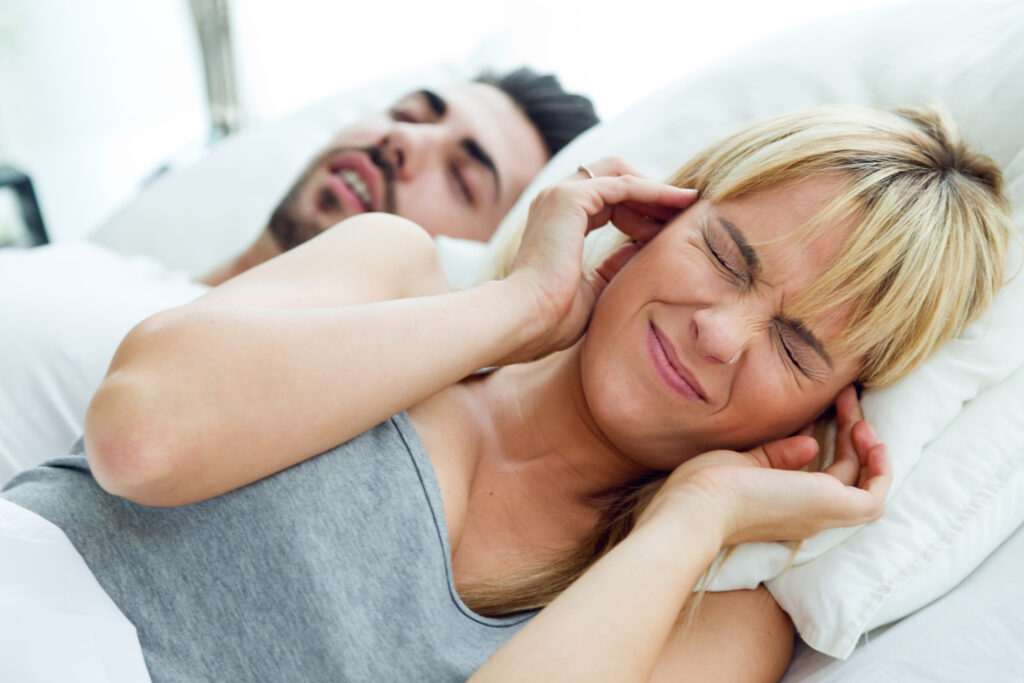
Even if you don’t fully wake up, these small stress spikes can add fuel to your anxiety. You wake up the next morning with:
- A dry mouth
- A heavy, foggy head
- A sense of unease and irritability
- A feeling that you never truly “switched off”
This is why many people who struggle with both snoring and anxiety feel like they can’t break the cycle — their sleep is not the safe, calm space their mind and body need.
Why Nasal Breathing Helps Calm the Nervous System
One of the simplest and most powerful ways to signal “you are safe” to your body is through your breath — and specifically through nasal breathing. When you breathe through your nose instead of your mouth, several things happen:
- The air is filtered, warmed and humidified
- Your breathing naturally slows down
- Your diaphragm (belly) becomes more involved
- Your body produces more nitric oxide, which supports blood flow
Slow, nasal breathing is closely connected to the rest-and-digest state. It tells your nervous system: “You’re safe. You can relax now.” This is why many breathing exercises for anxiety focus on:
- Inhaling through the nose
- Extending the exhale
- Keeping the breath gentle and quiet

But here’s the problem: it’s easy to breathe calmly through your nose when you’re awake and focused. It’s much harder to maintain that pattern all night if your mouth naturally falls open when you sleep.
Where KOEC Mouth Tape Fits In
This is where mouth taping comes in — and specifically, a gentle, skin-friendly tape like KOEC Mouth Tape. The idea is simple:
You place a soft strip over your lips before bed so they stay gently closed, encouraging your body to breathe through your nose instead of your mouth. The goal is not to “seal” your mouth shut aggressively, but to give your lips a light reminder to stay together.
KOEC Mouth Tape is designed to feel less like a medical device and more like part of your night-time self-care:
- Soft fabric-like surface that is kind to the skin
- Skin-friendly adhesive suitable for the delicate lip area
- Oval shape that supports the lips without covering your whole face
- Small central vent for comfort and peace of mind
- Calm, feminine design that matches a beauty sleep routine
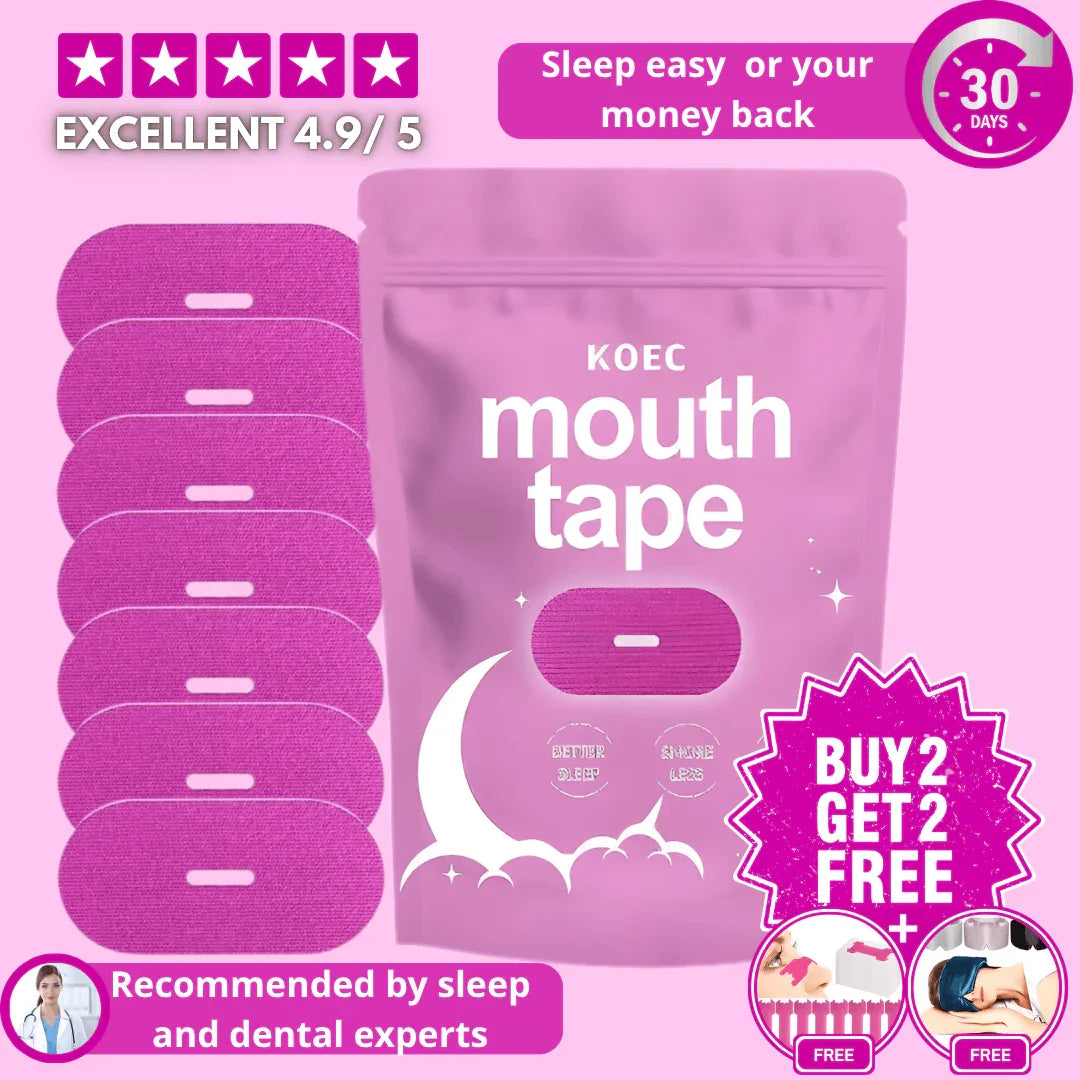
By gently supporting nasal breathing during the night, KOEC can help reduce mouth breathing, snoring and night-time dry mouth — which in turn can support a calmer nervous system and deeper sleep.
Important: KOEC is not a treatment for anxiety disorders or panic attacks. It is a sleep-support tool that can be part of a broader plan to care for your nervous system and your mental health.
A Simple Night Routine to Support a Calmer Mind & Mouth Taping
If you want to use KOEC Mouth Tape as part of an anxiety-friendly night routine, think in small, gentle steps. You don’t have to do everything perfectly. Consistency matters more than perfection.
Step 1: Downshift Your Evening Pace
About 60–90 minutes before bed:
- Dim the lights and reduce bright screens
- Avoid heavy news, intense arguments or stressful work
- Switch to quieter activities: reading, stretching, light journaling
Step 2: Calm the Body First
Your brain listens to your body. If your muscles are tense and your breath is fast, your mind assumes there is a threat. To send the opposite signal:
- Do a few gentle stretches or yoga poses
- Take a warm shower or bath
- Do 3–5 minutes of slow nasal breathing (inhale through the nose, exhale slowly through the nose)

Step 3: Prepare Your Nose
Because mouth taping supports nasal breathing, make sure your nose feels clear:
- Blow your nose gently
- Use a saline spray if needed and recommended
- If you’re very blocked, talk to a doctor instead of forcing mouth taping
Step 4: Apply KOEC Mouth Tape
Once your skin is clean and dry (especially around the lips), peel one KOEC strip from the backing. Close your lips softly and place the strip horizontally in the centre of your mouth. Smooth it with your fingers.
You should feel a light, reassuring hold. You are helping your body choose nasal breathing, which sends calmer signals to your nervous system all night.
Step 5: Give Your Mind a Gentle Landing
Right after you apply KOEC, instead of scrolling your phone, try:
- Writing down any worries or to-dos for tomorrow (so your brain doesn’t hold them)
- Listening to a short, soothing audio (like soft music or a sleep story)
- Doing a simple breathing pattern: inhale through the nose for 4, exhale through the nose for 6–8

What Changes Might You Notice Over Time?
Every nervous system is different, and anxiety is complex. But many people who combine better night-time breathing with a calming routine and KOEC Mouth Tape report:
- Fewer awakenings with a dry mouth
- Quieter snoring (sometimes their partner notices first)
- Waking up with less “wired and tired” feeling
- A slightly calmer baseline mood during the day
- A sense that sleep is finally starting to feel restorative again

These shifts are often subtle at first. That’s why it can be helpful to treat KOEC and nasal breathing as a 30-night experiment instead of a one-night miracle.
When You Should Talk to a Professional
Mouth taping with KOEC can support calmer sleep and better breathing, but it is not a substitute for therapy or medical care. You should reach out to a professional if you:
- Experience frequent panic attacks, especially at night
- Have thoughts of self-harm or feel hopeless
- Wake up gasping, choking or with severe chest discomfort
- Suspect you may have sleep apnea (long pauses in breathing, very loud snoring, extreme daytime sleepiness)
A therapist, doctor or sleep specialist can help you address the deeper layers of anxiety and sleep disorders. KOEC can then sit alongside that as a gentle tool for your breathing and your night routine.
Creating a Kinder Night for Your Mind and Body
Anxiety at night is not just “in your head”. It’s in your breath, your heart rate, your muscles and your nervous system. Mouth breathing and snoring can quietly keep your body stuck in stress mode, even when you’re trying to rest.
By supporting nasal breathing with a soft, feminine mouth tape like KOEC Mouth Tape, and pairing it with a calming pre-sleep ritual, you can give your body a different message: “It’s safe now. You can let go.”
If you’re ready to explore how changing your breathing at night can support your anxiety, your sleep and your mornings, you can start your own 30-night experiment with KOEC at koec.online. One small strip every night might become one of the kindest habits you build for your nervous system.


